

I’m sitting in Pearson airport on the way back from Mexico, so time for another quick travelogue.
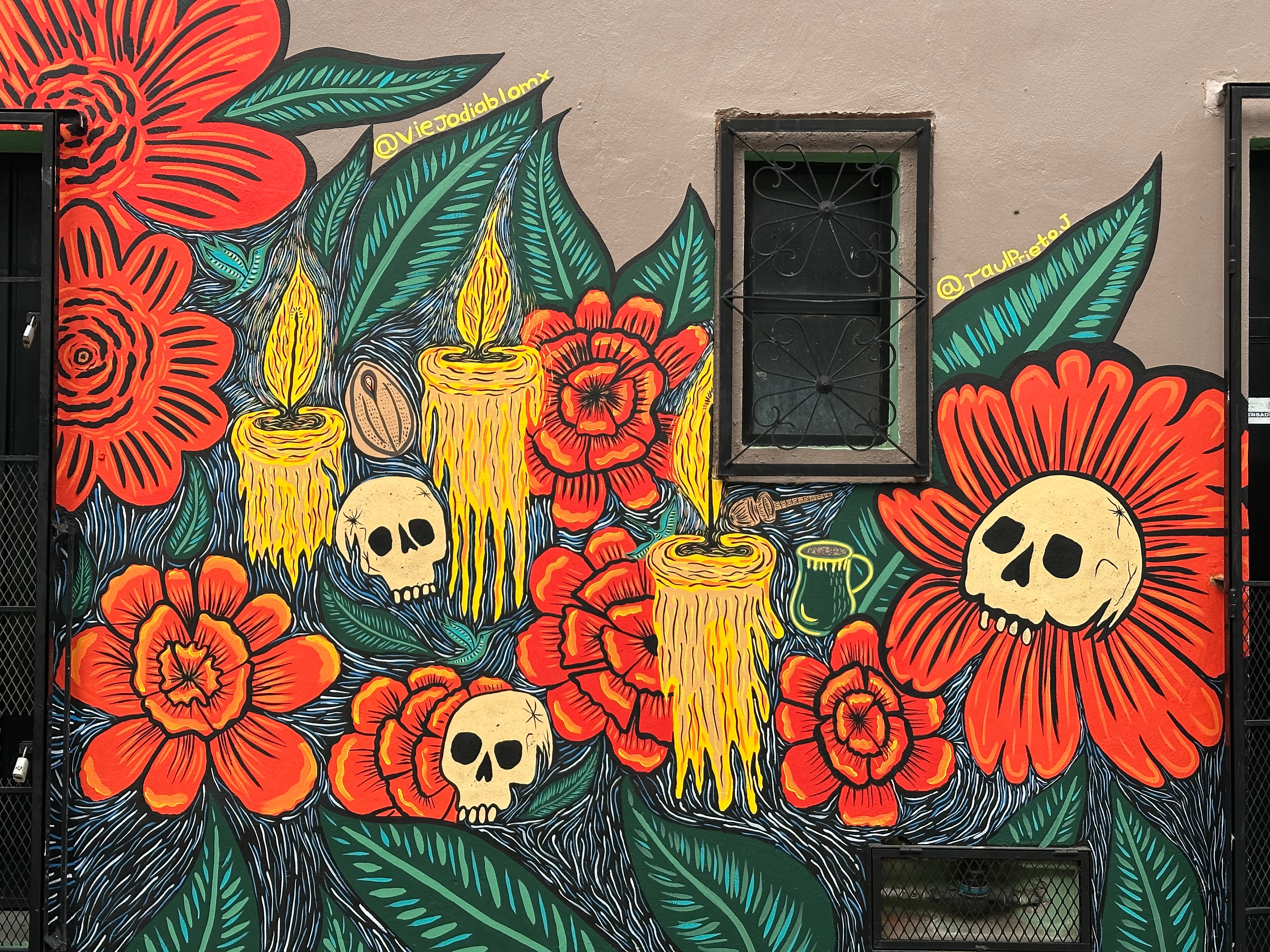
I think my first exposure to Día de Muertos as a cultural concept came from playing Grim Fandango as a kid. The whole idea fascinated me—a Mesoamerican conception of the afterlife as a narrative framing mechanism was tremendously compelling. The fusion of noir aesthetics and the rich history and traditions of civilizations like the Zapotec kindled in me a desire to learn more, so when the opportunity arose to experience some of those traditions myself, I was more than excited to participate.
October 31
Oaxaca


The festival itself is celebrated throughout Mexico, but the epicentre of the Day of the Dead is Oaxaca, which is where we found ourselves on what we might more typically term All Hallow’s Eve. We spent some time exploring the city and taking in the art, pottery, murals, and general vibe before making our own pilgrimage to el Panteón de San Miguel.
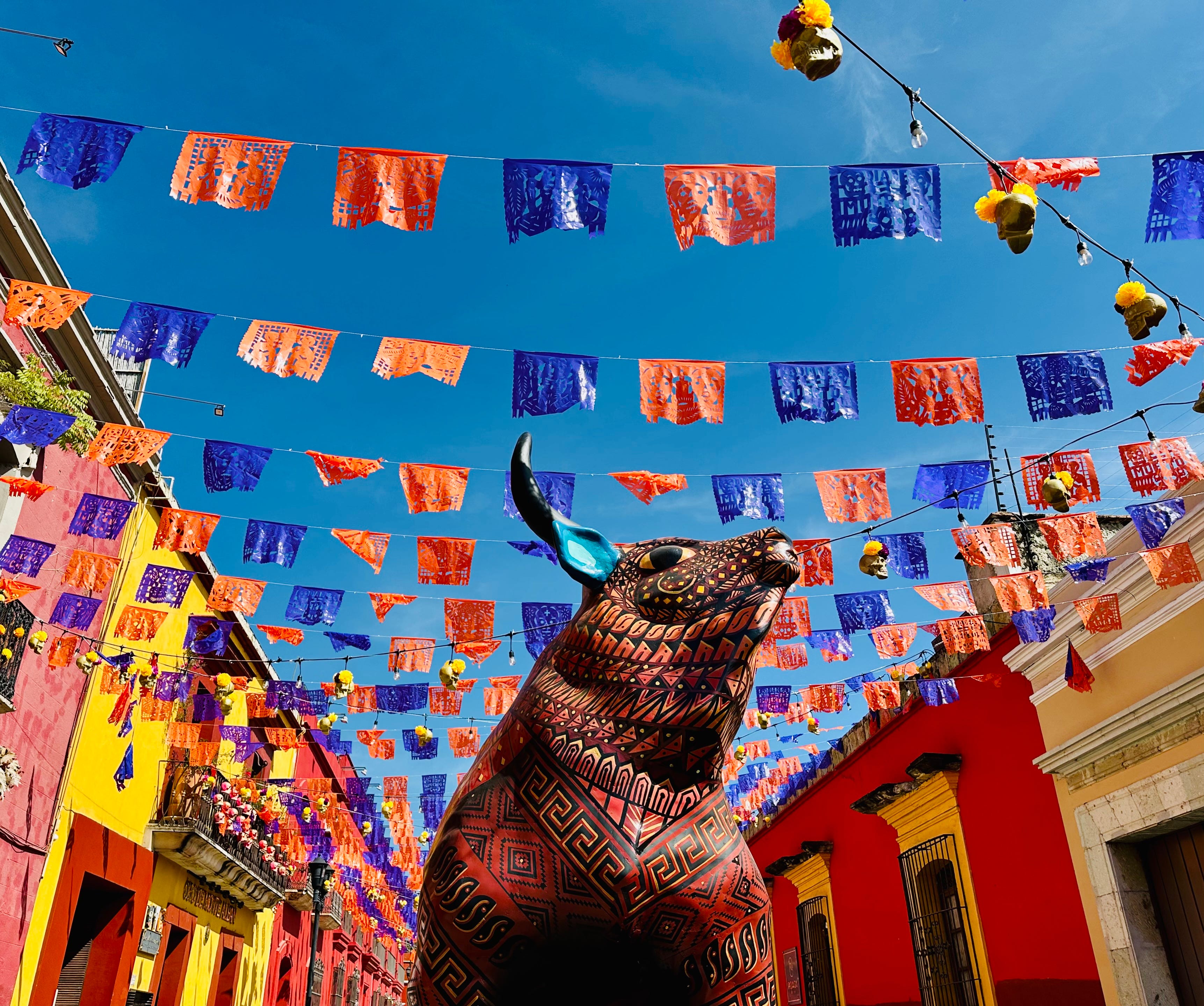
Each day of the festival celebrates a certain group of departed individuals (incidentally, we discovered that October 27, our wedding anniversary, is traditionally reserved to celebrate pets). On this particular evening, we carried candles and cempazúchitl (marigold flowers) to the cemetery to pay our respects to graves that had not recently been illuminated.
November 1
Mitla
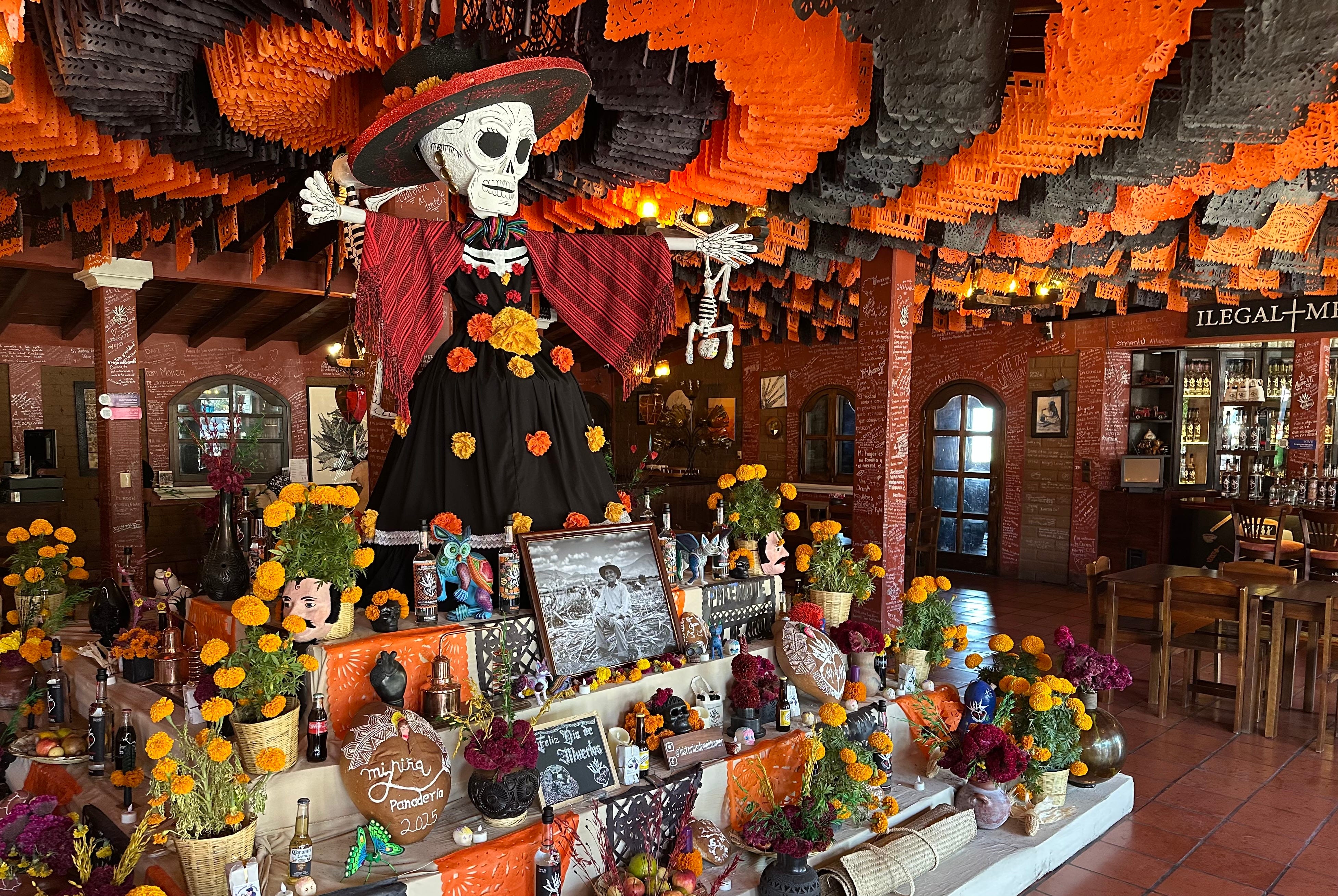
The following day we took a brief detour to visit the Mal de Amor mezcal distillery in Mitla. Mal de Amor happens to own Ilegal Mezcal, which is one of the few brands of mezcal we can readily acquire in Halifax. It was a real treat to visit the place of its origin and learn about the artisanal process of its creation.


One point of interest: “artisanal” here isn’t a self-aggrandizing epithet. It’s a specific method of preparation that involves no electrical equipment or industrial machinery. Mezcal can be made by three distinct processes: industrial, artisanal, and ancestral. Industrial mezcal is as you would expect: electric machines, pressure cookers, etc. Artisanal uses wood-fired copper stills and grinding mills pulled by horses. Ancestral is the most labour-intensive and restrictive—only clay stills and person power are permitted.
San Agustín Etla
In the evening, we travelled to San Agustín Etla, home to one of the livelier celebrations of the festival. We gathered for some tamales at a local establishment and then headed to el Templo De Soledad Vista Hermosa, a small church perched above the valley.
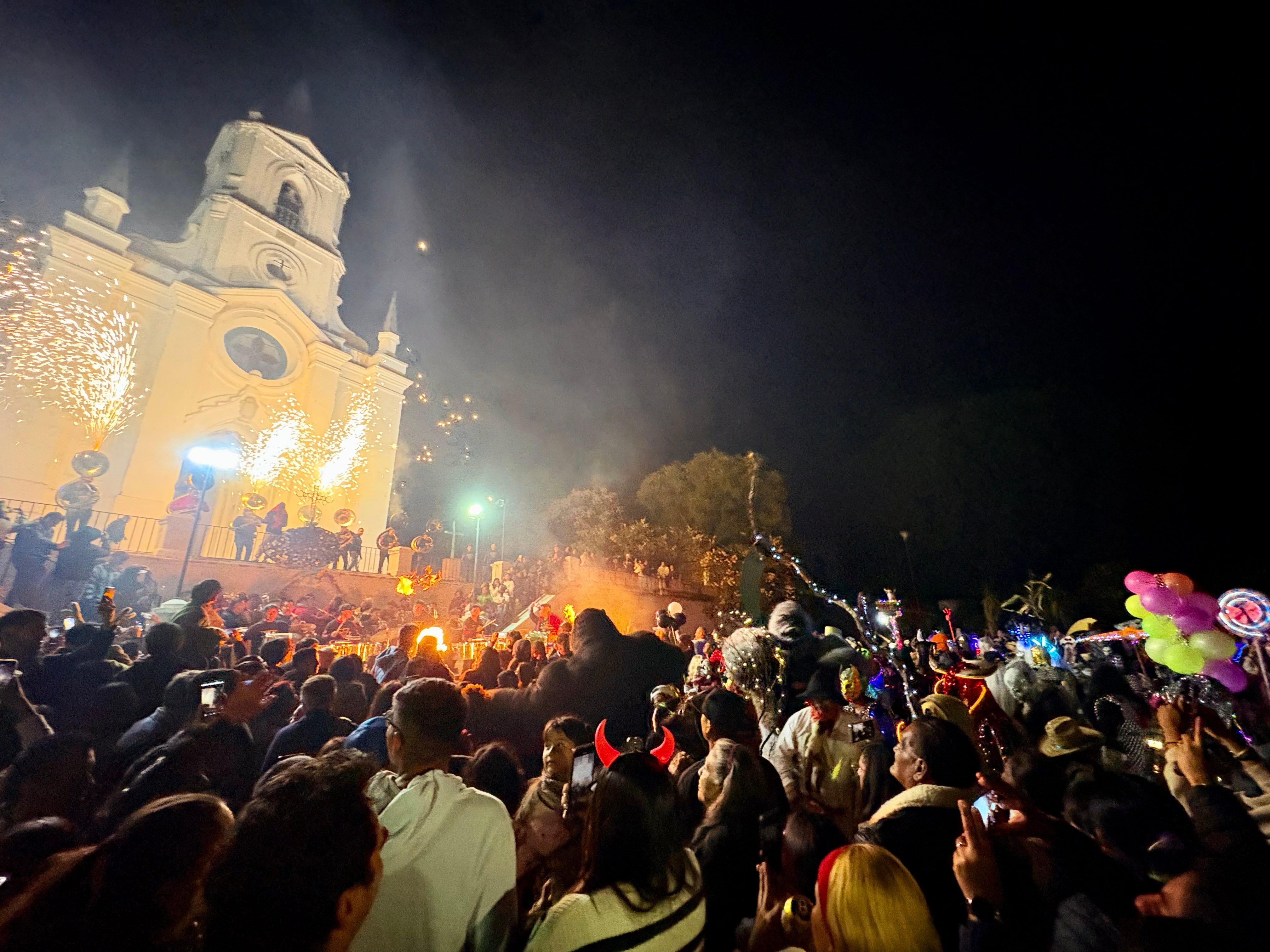
There we bore witness to la Muerteada—a night-long procession through the streets of town that begins with a sort of Commedia dell’Arte performance (la relación) featuring archetypal characters (the happy widow, the dead husband, the doctor, the priest, etc.). The general format involves un espiritista (the figured covered in bells and a mirrored cloak) bringing a man back from the dead while the devil, death, the pope, and other figures butt in with rhyming couplets roasting the past year’s local goings-on.
At the end of the performance, the celebration transformed into a wild dance before breaking forth into the streets in a winding procession down the hill to the centre of town. We joined the crowd and followed suit, eventually breaking off in the early hours of the morning to make the trek back to Oaxaca proper.


November 2
Monte Albán
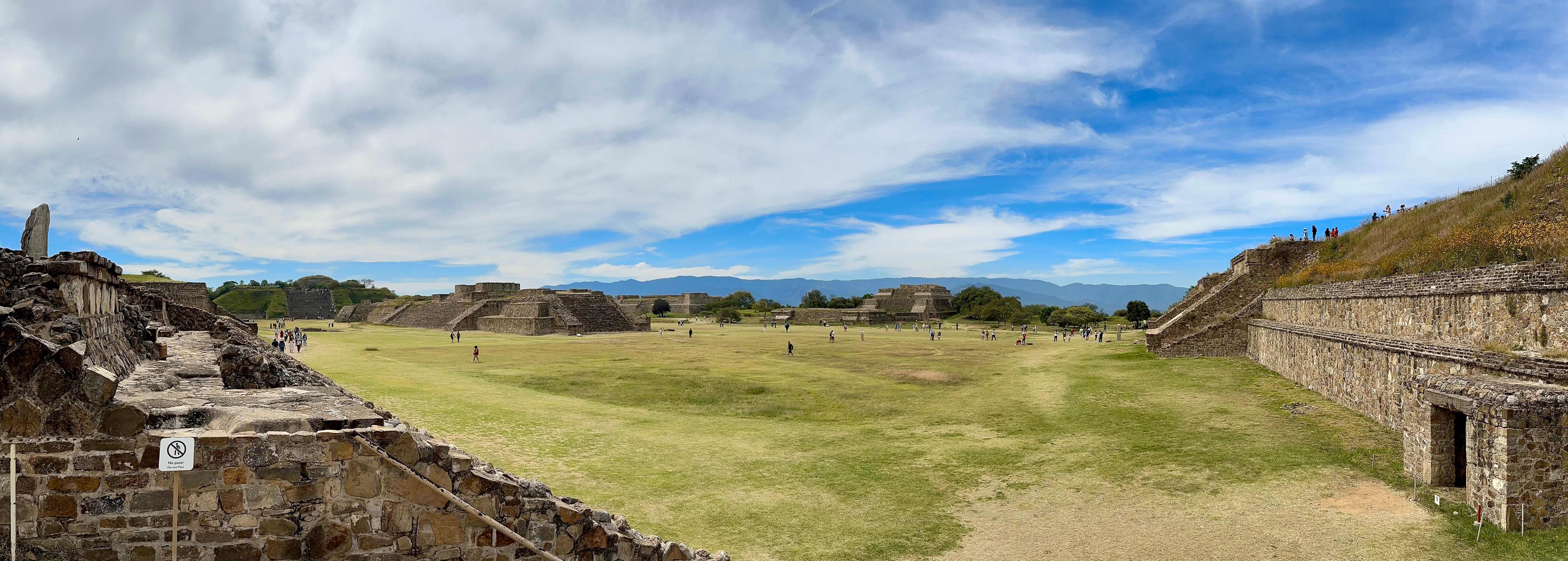
Just outside the centre of town, on a hilltop overlooking the city, stands Monte Albán, the ancient capital of the Zapotec people. This was the locus of their society from around 500 BCE into the Late Classic era. Standing amongst the foundations of these monumental pyramids, it’s hard not to be struck by the power and theological connection they were built to facilitate.


It’s particularly fascinating to me that despite the decline of this archeological site in the early parts of the common era (and active cultural suppression by the Spanish), the culture of the Zapotec people persists to this day. The language family in particular claims some half a million speakers of various dialects in and around the central Mexican plateau.
Oaxaca
That evening, we returned to Oaxaca and spent the last few moments of twilight participating in the time-honoured tradition of changing our appearances and donning the maquillage of la Catrina y su Calavera. Big shout out to Carlos, our photographer, who did an incredible job capturing the moment for us.


And with that, our brief sojourn to the land of the dead was at an end. All in all, a lovely time in a beautiful region with so many incredible people—we’re very much excited to visit again.